Vintage Old Handwriting Backgrounds: Timeless Design Assets
There’s a certain weight to a handwritten letter, a sense of history that a digital font sometimes struggles to capture. That’s the exact feeling we sought to bottle with the 33 Vintage Old Handwriting Digital Papers Pack. We didn’t just scan old textures; we curated a collection of stories. This isn't merely a set of backgrounds; it is a toolkit for designers and creators who understand that the most powerful designs often feel the most human. In a landscape saturated with slick, vector-perfect graphics, these papers offer a return to the tactile, the imperfect, and the deeply personal.
The Anatomy of Nostalgia: More Than Just Texture
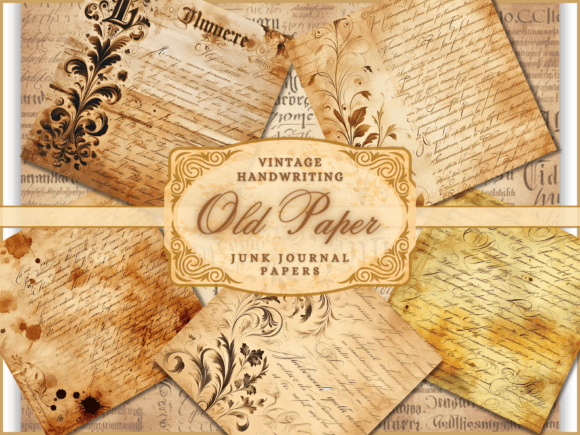
When you open this pack, you aren't just getting "old paper." You are stepping into a specific aesthetic universe. The visual characteristics here are defined by high-fidelity capture—5000x5000 pixels—that preserves every fiber of the parchment and every ink bleed of the script. We have moved beyond the generic "tea-stained" look. Instead, you will find a variety of personalities within the collection. Some sheets feature the delicate, looping cursive of a Victorian love letter, while others mimic the hurried, functional scrawl of a 19th-century merchant’s ledger.
The appeal of these Old Papers - Old Handwriting Backgrounds lies in their ability to provide instant atmosphere. The style is undeniably vintage, drawing on the aesthetics of ephemera, antique correspondence, and heirloom journals. However, the execution is modern. The resolution ensures that when you scale these assets for large-format printing or high-definition screens, the integrity of the vintage texture remains crisp. This is crucial for professional applications where pixelation is not an option. The "personality" of these papers is one of authenticity; they suggest a narrative before the viewer even reads a word of your content.
Strategic Applications: Where Vintage Meets Modern Typography
Understanding where to deploy these assets is key to effective design. As a creative professional, you know that context dictates success. These backgrounds are not just for scrapbooking anymore, though they excel there. They are powerful design assets for commercial and branding work, provided they are used with strategic intent.
For brand identity, these papers are gold for businesses in the artisanal sector. Think craft distilleries, boutique bakeries, bespoke tailors, or heritage brands. Using a background from this pack on a business card or letterhead immediately communicates tradition, care, and a hands-on approach. It pairs exceptionally well with a sturdy serif font for body text or a bold sans serif font for contrast. The juxtaposition of a rugged, handwritten background against clean, modern typography creates a visual tension that is both professional and intriguing.
In editorial design and packaging design, these textures serve as a grounding element. They can be used to create section breaks in a magazine, add depth to a book cover, or wrap a product box that needs to feel "luxe" and "classic." For web design, while you wouldn't use a 5000px image as a full-page background (due to load times), cropping specific sections for hero banners or sidebar textures can add immense character to a site. Similarly, in social media graphics, these backgrounds provide a perfect canvas for quotes, announcements, and storytelling posts that need to stop the scroll with a touch of class.
Technical Guidance: Pairing, Hierarchy, and Readability
Using a premium font or asset pack effectively requires more than just drag-and-drop. You need to consider how the Old Papers - Old Handwriting Backgrounds interact with your primary message. Here is some practical advice for integrating these assets into your workflow:
- Visual Hierarchy and Readability: The biggest challenge with textured backgrounds is maintaining legibility. Because these papers feature actual handwriting and texture, they are "busy." To ensure your message is read, you need high contrast. Use a bold display font or a heavy weight for headlines. Avoid placing small, light-colored text directly over the densest areas of the handwriting. Instead, use the negative space—the margins and less textured areas—to anchor your text blocks.
- Font Pairing Strategy: Do not pair these backgrounds with another script font or handwritten font. That creates visual chaos. The background already provides the "handmade" element. Your primary typeface should be something clean and structured. A geometric sans serif font (like Futura or Montserrat) creates a modern-retro vibe. A classic serif font (like Garamond or Times) leans into the traditional, academic feel.
- Evaluating Project Fit: Ask yourself: Does my brand voice rely on storytelling? If you are a tech startup focused on hyper-speed efficiency, a vintage paper might send the wrong message. However, if you are a consultant, a lawyer, or a coach who values "legacy" and "wisdom," these textures can subtly reinforce those values. They are excellent for digital scrapbooking and personal journaling, allowing hobbyists to create memory books that feel tangible.
- Licensing and Versatility: Always review the licensing for any commercial font or asset. This pack is designed for versatility, covering both personal and commercial use in many scenarios. Whether you are designing a logo, creating merchandise, or building a website, ensure your usage aligns with the terms. The value here is in the variety—33 options mean you can maintain a consistent aesthetic across a campaign without repeating the exact same texture twice.
Design Observations: The Psychological Impact
Why does this specific style work so well for marketing and content creation? It triggers a psychological response known as "warmth." In an era of digital sterility, the visual cues of handwriting and aging paper suggest a human touch. For entrepreneurs and marketers, this is a tool to build trust. It suggests that behind the screen, there is a person, not just an algorithm.
When using the Old Papers - Old Handwriting Backgrounds, observe how the texture influences the "voice" of your content. A dark, sepia-toned background with heavy script might feel serious, historical, and authoritative—great for a law firm's "About Us" page or a history podcast. A lighter, cream-colored paper with faint blue ink lines might feel lighter, more romantic, and approachable—perfect for wedding invitations or lifestyle blogs. The texture acts as a subliminal cue, preparing the reader for the tone of the message before they process the semantics.
Ultimately, this collection is about versatility and authenticity. It bridges the gap between the raw energy of a sketchbook and the polished requirements of professional design assets. Whether you are crafting a logo design for a local coffee shop or laying out a photo album for a client, these backgrounds provide the missing link: texture that feels real. By combining these high-resolution papers with disciplined modern typography